
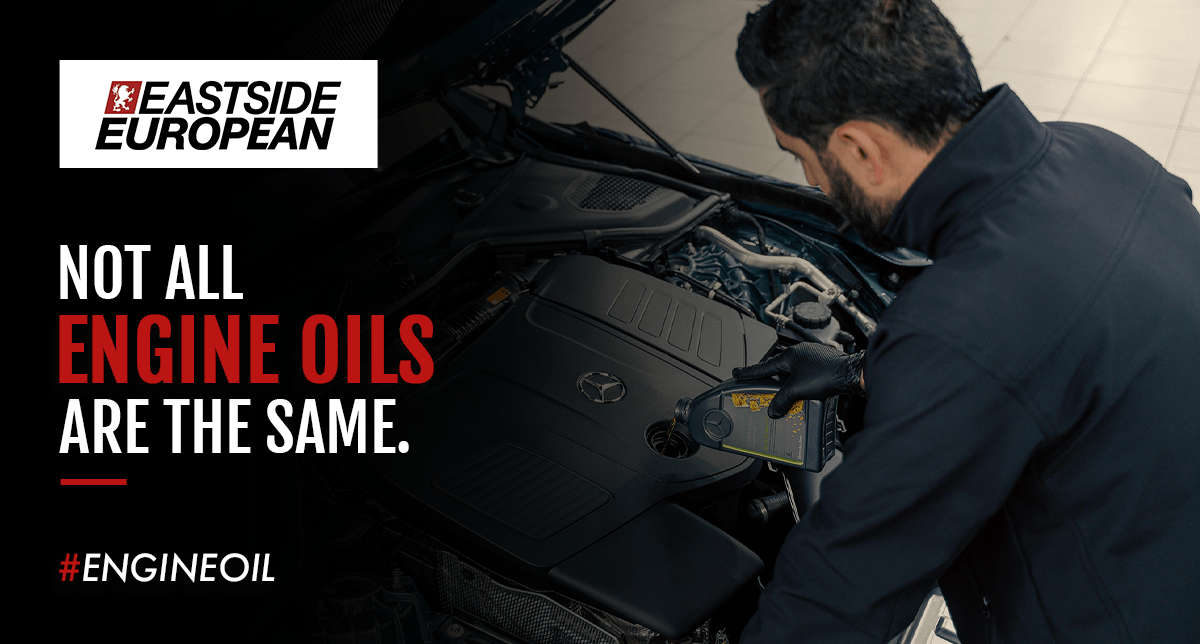
It’s a common assumption that engine oil is interchangeable — that as long as the viscosity looks right, any oil will do. For European vehicles, that assumption can lead to serious problems.
Modern European engines are designed with tight tolerances, turbochargers, and advanced internal components that depend on very specific oil formulations. These oils are engineered not just for lubrication, but also for heat resistance, deposit control, and long-term stability under high stress.
Using the wrong oil — even if it seems “close enough” — can affect how the engine performs internally. Lower-quality or incorrect oil may break down faster under heat, reducing its ability to protect moving parts. Over time, this leads to increased friction, sludge formation, and accelerated wear.
In turbocharged engines, the impact is even greater. Turbo systems rely on oil for both lubrication and cooling. If the oil degrades or fails to flow properly, it can lead to premature turbo wear and reduced efficiency.
Another important factor is manufacturer approval. European brands specify oil standards that go beyond basic viscosity ratings. These standards ensure the oil meets specific performance requirements. Ignoring them may not cause immediate failure, but it gradually affects engine health.
Oil is often seen as a routine service item, but in reality, it plays a critical role in long-term reliability. Choosing the correct oil and following proper service intervals helps maintain performance and prevent costly issues.
Final Thought
Engine oil is not universal. In European vehicles, using the right specification is essential for protecting performance, efficiency, and engine longevity.