
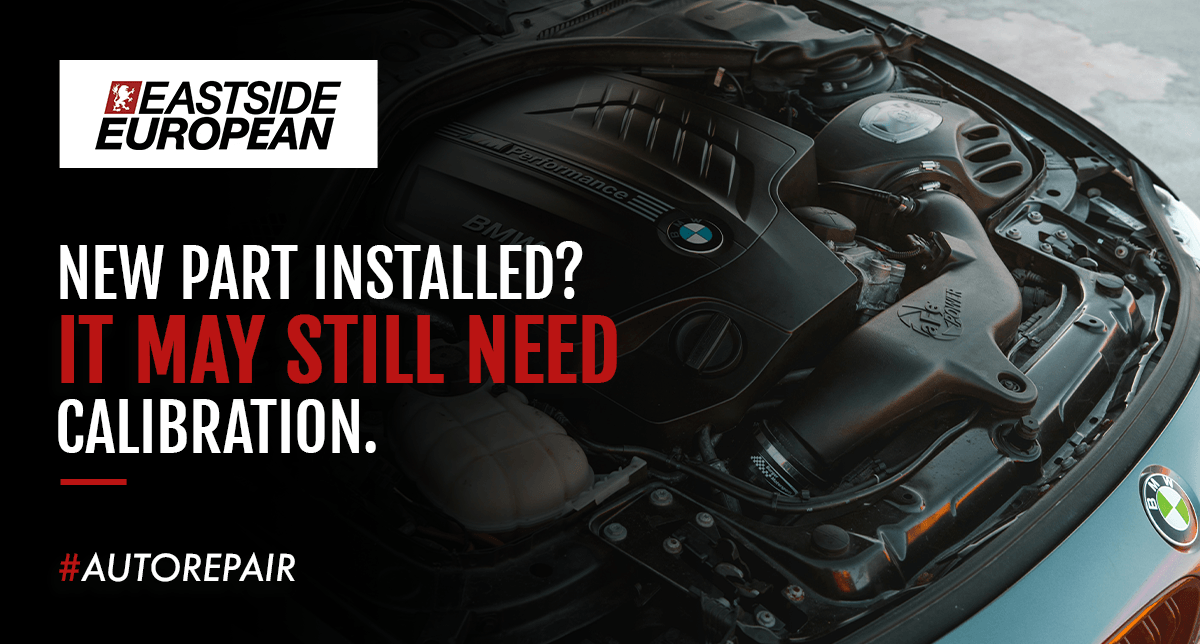
Repairing a component is only part of the job in modern European vehicles. Once certain parts are replaced, systems often need to be recalibrated so the vehicle can recognize and properly operate with the new components.
This step is commonly overlooked outside specialized repair environments.
Modern European cars rely heavily on sensors, modules, cameras, and electronically controlled systems. These systems continuously communicate with one another, adjusting vehicle behavior in real time. When a component is replaced, the system may need recalibration to restore proper functionality.
Examples include steering angle sensors, suspension ride height systems, adaptive headlights, driver assistance features, and transmission adaptations.
Without calibration, the vehicle may still operate — but not correctly.
Drivers may notice warning lights, inconsistent performance, steering irregularities, or inaccurate sensor readings. In some cases, safety systems such as lane assist or stability control may not function properly after repairs if recalibration is skipped.
Calibration ensures that replacement components align with factory specifications and communicate correctly with other systems.
This process requires specialized diagnostic equipment and manufacturer-level procedures. Generic tools often cannot perform the necessary programming or adaptation functions required by European vehicles.
Modern repairs are no longer purely mechanical. Electronic integration has become a major part of vehicle service, especially in luxury and performance-oriented platforms.
Skipping calibration may save time initially, but it often creates drivability issues, repeat repairs, and reduced system accuracy later.
Final Thought
Replacing a part is only half the repair. Proper calibration ensures the vehicle functions safely, accurately, and as intended after service.